How to Write a Book With No Experience (Using AI)
Never written a book? With AI you can draft one in an afternoon. Here is how to plan it, feed AI what you know, make it yours and publish it.
 By Philip Ghezelbash
You do not need experience to write a book in 2026. AI can turn your notes into a full first draft in an afternoon, so the blank page is no longer what stops people. What AI cannot do is know what you know, decide what is true, or make the book worth reading. That part is yours, and you can do it even if you have never written anything longer than an email.
The honest version: a first how-to book of 20,000 to 25,000 words takes about 25 to 50 hours of your time with AI, or two to four weeks of evenings. Very little of that is typing. Most of it is deciding what the book says, rewriting the draft in your voice and checking the facts.
This guide is for nonfiction, and it is one part of our guide to how to write an ebook. For more prompts, see how to write an ebook with AI, and for research and structure, read how to write a nonfiction book.
What AI changed, and what it did not
AI took away the hardest part for beginners: getting from an idea to a full draft. It did not change what makes a book good. Readers still buy a book because they want a specific result from someone who has been there, and they can spot a generic AI book in a page.
| What AI does well | What only you can do |
|---|---|
| Turns your notes into a readable first draft | Know what actually works, from doing it |
| Suggests a structure and chapter order | Decide who the book is for and what to leave out |
| Asks questions that pull out what you know | Supply real stories, numbers and examples |
| Fixes clumsy sentences and grammar | Check every fact before it goes to print |
So you are less of a typist and more of an editor and expert. Here is where the hours go:
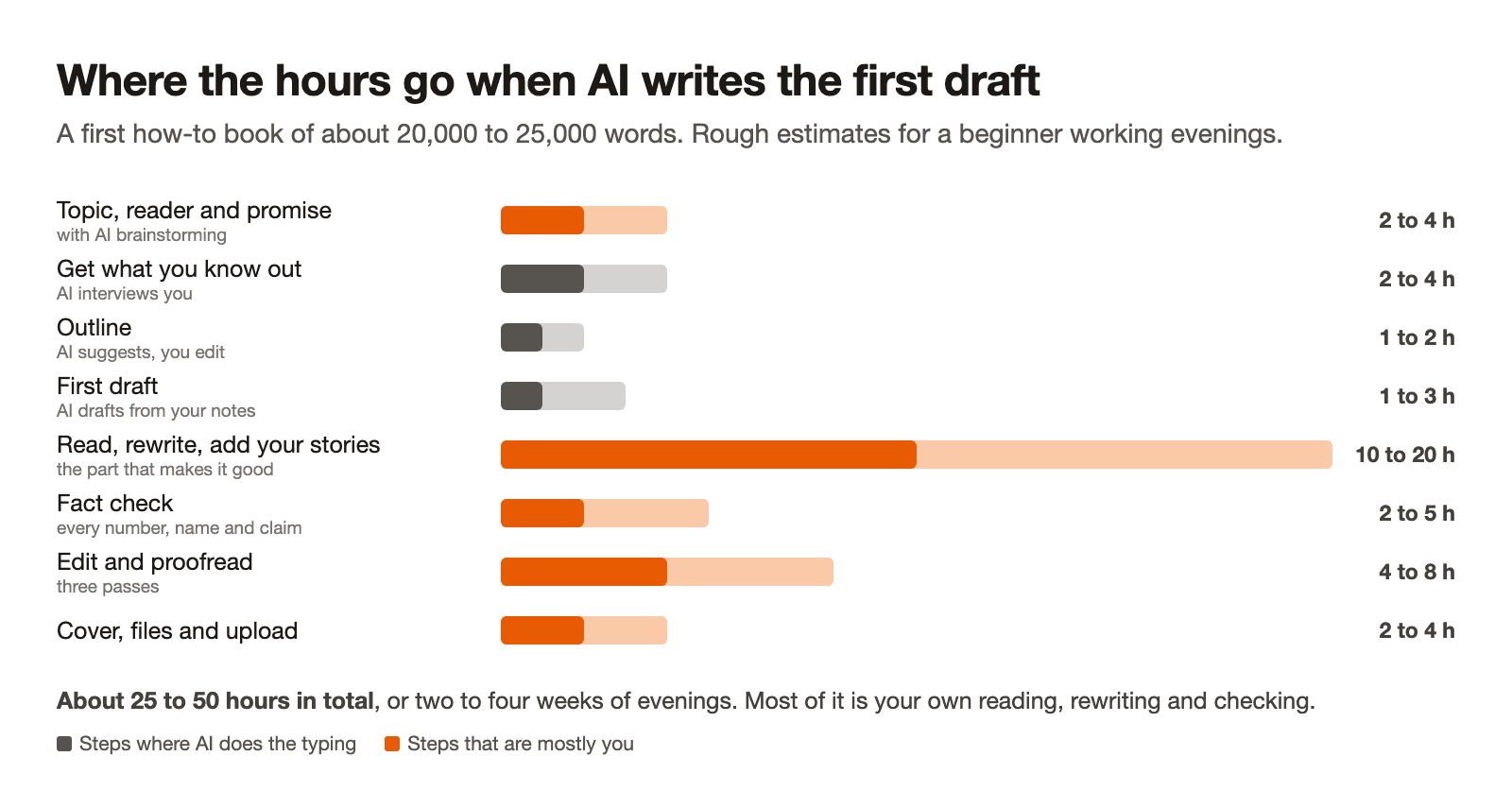
You could skip the rewrite and publish in a weekend, but you would be publishing the same book as everyone else.
Do you need experience to write a book?
No. Amazon, Apple Books and Kobo do not ask for a degree, a writing history or a previous book.
Writing experience matters much less than it used to, because AI handles grammar and sentence flow. What you need is the ability to read a paragraph and know whether it is true, useful and clear.
Subject experience matters more than ever, because it is the one thing AI cannot fake. You do not need to be the world's leading expert, just a few steps ahead of your reader. You are ready to write about a topic if you have solved the problem yourself, people already ask you for help with it, or you could explain the basics to a friend in ten minutes. If none of those fit, plan for more research and a few interviews, and be open with the reader about where you are coming from.
Step 1: Pick a topic you know, then narrow it
Start with your own life, not a list of trending topics. What do people come to you for help with? What did you learn the hard way? What could you talk about for an hour without notes? Then narrow it until it is one book.
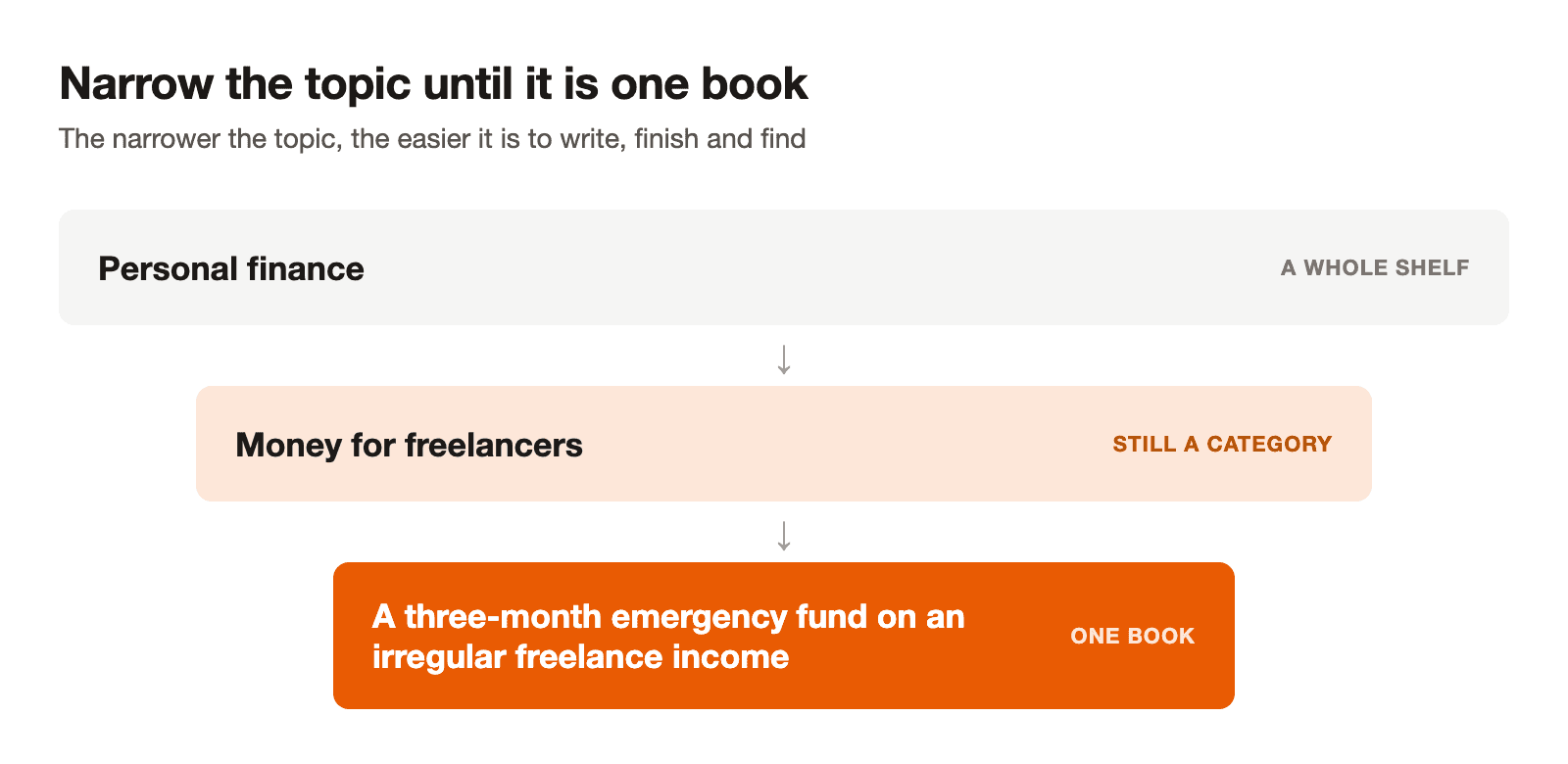
AI is a good brainstorming partner here. Ask it to list 20 specific problems your reader has with the topic, then pick the one you know best. Our ebook ideas and ebook niches that sell can help too.
Step 2: Check that people want it
Spend 20 minutes in the Kindle store. Search the topic the way your reader would, and look at what comes up.
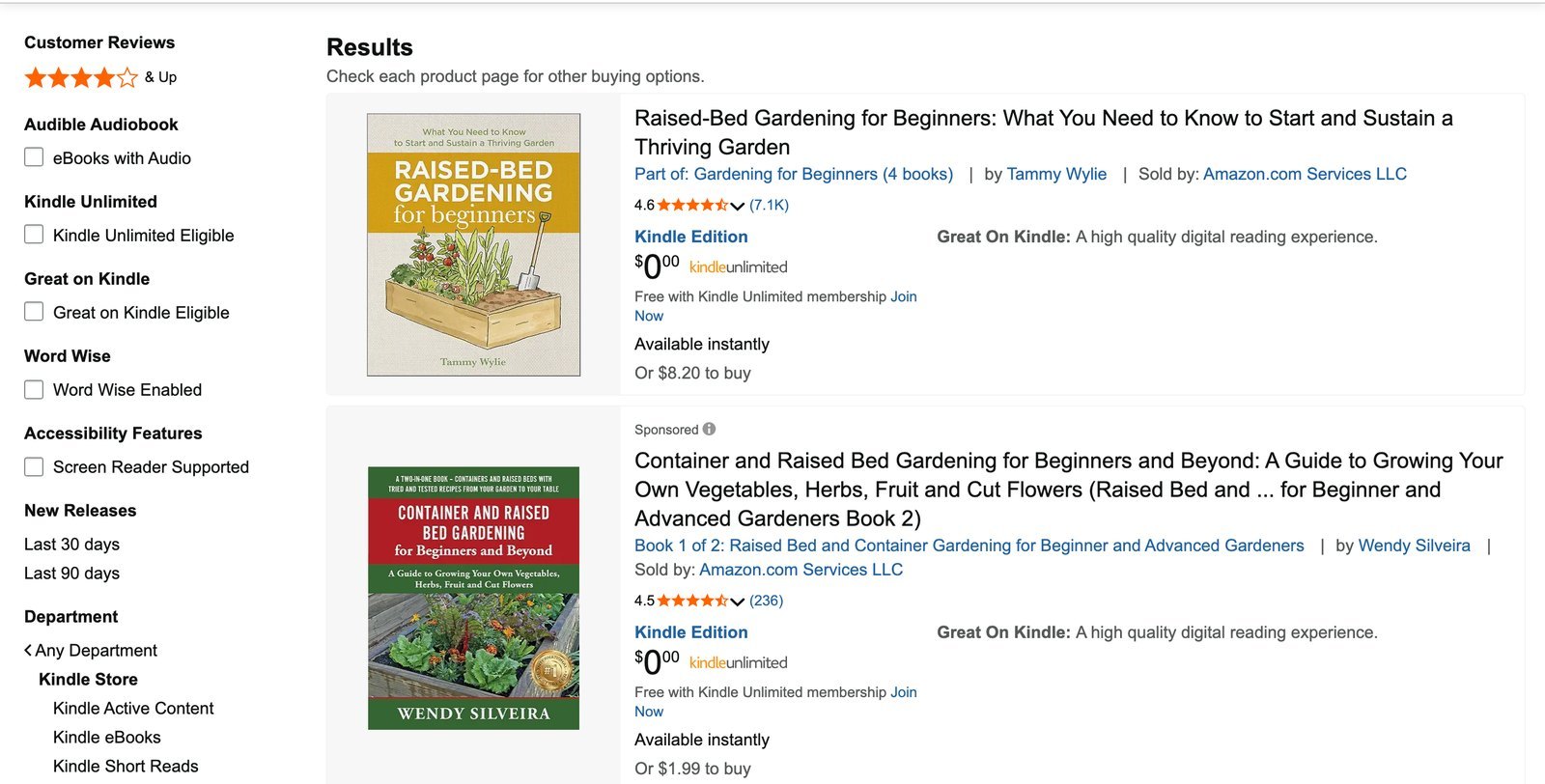
- Lots of ratings on the top results, like the 7,100 above, means steady demand. Competition is a good sign.
- Three star reviews on the top books tell you exactly what readers found missing or out of date. That is your angle.
- Old publication dates mean there is room for a current book.
For a closer look, our Amazon book sales calculator turns a Best Sellers Rank into a rough range of daily sales.
Step 3: Write your promise in one sentence
Picture one reader, such as "someone with a small yard who has killed every plant they have owned." Then finish this sentence:
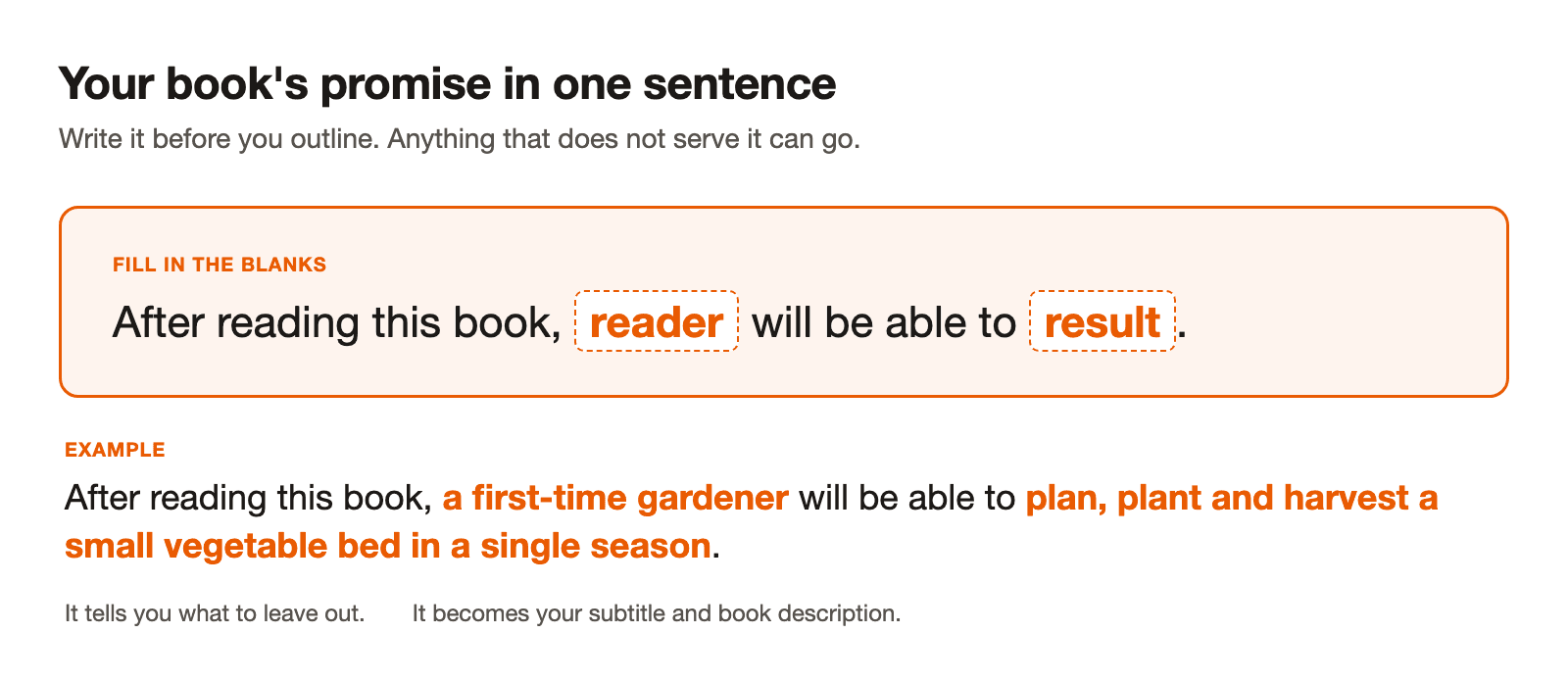
You will paste this sentence into every prompt. It keeps the AI on track, tells you what to cut, and becomes the start of your subtitle. If you cannot finish it, go back to step 1 and narrow the topic.
Step 4: Let AI interview you
This is the step that makes a book possible without writing experience. Instead of staring at a blank page, let the AI ask the questions while you answer in rough notes or out loud.
I want to write a short how-to book for first-time gardeners with a small yard. After reading it, they will be able to plan, plant and harvest one raised bed in a single season. Interview me to get what I know out of my head. Ask one question at a time, starting with what a complete beginner would ask. When my answer is vague, ask a follow-up. Whenever I make a claim, ask me for a real example from my own experience. After 20 questions, sort my answers into themes and list what is still missing.
Answer in your own words, typos and all, or talk using voice typing. Thirty to sixty minutes of this gives you more usable material than a week of trying to write. Add anything else you have, such as old blog posts or emails where you explained the topic, so the AI can write with your examples.
Step 5: Build the outline with AI, then edit it
Give the AI your promise and the themes from your interview, and ask for eight to ten chapters, each answering one question your reader has, in the order they would ask it. Or put a one-line idea into the ebook outline generator. Here is the first outline it gave for the gardening book:
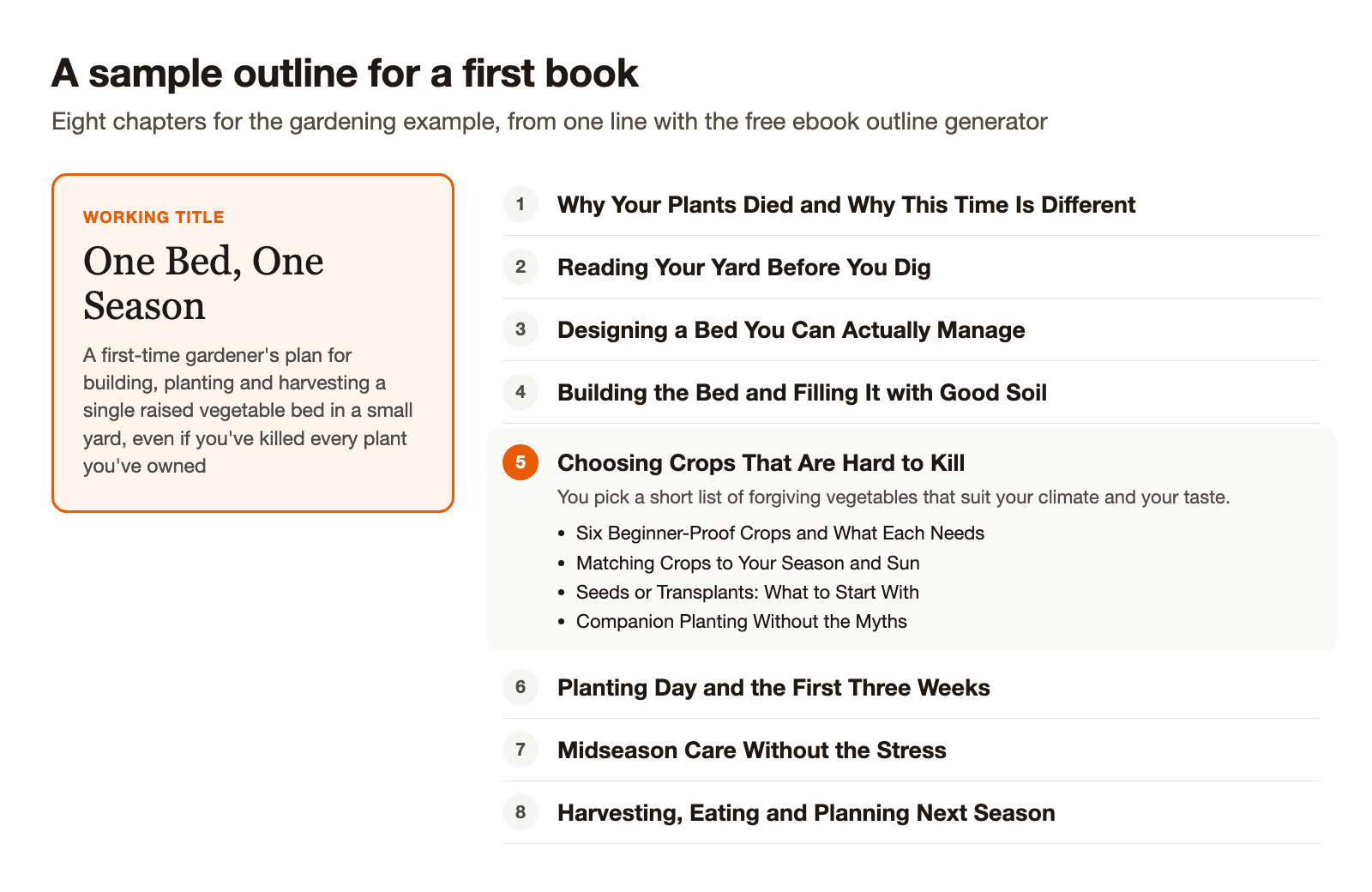
Then check it against what you know. Cut any chapter that does not serve the promise, add any step your reader would get stuck on, and make sure you have a real story or example for every chapter. Keep a first book short: eight chapters of about 2,500 to 3,000 words is plenty. See how long an ebook should be for other ranges.
Step 6: Have AI draft one chapter at a time
Do not ask for the whole book in one prompt. You get thin chapters that repeat each other. Draft chapter by chapter, and give the AI your promise, the outline, a summary of earlier chapters and your notes each time.
Here is my book's promise, the full outline, a summary of chapters 1 to 4, and my notes for chapter 5, "Choosing Crops That Are Hard to Kill." Write a first draft of about 2,500 words using only what is in my notes. Write to one reader in plain English and short sentences. Where you need an example, a number or a fact that is not in my notes, write [NEED: what is missing] instead of making one up.
The [NEED] markers are the most important habit in this guide. AI will happily invent a statistic or a friend's story to fill a gap, and you will not always notice. A visible gap is something you can fix with a real example.
Any chatbot works, though you will paste the context in each time. Our guide to writing a book with ChatGPT shows how. Book tools such as Koobe keep the outline and earlier chapters in view for you.
Step 7: Make it yours
This is what separates a book people recommend from one they return. Read each chapter as your reader would, out loud if you can, and rewrite it until it sounds like you.
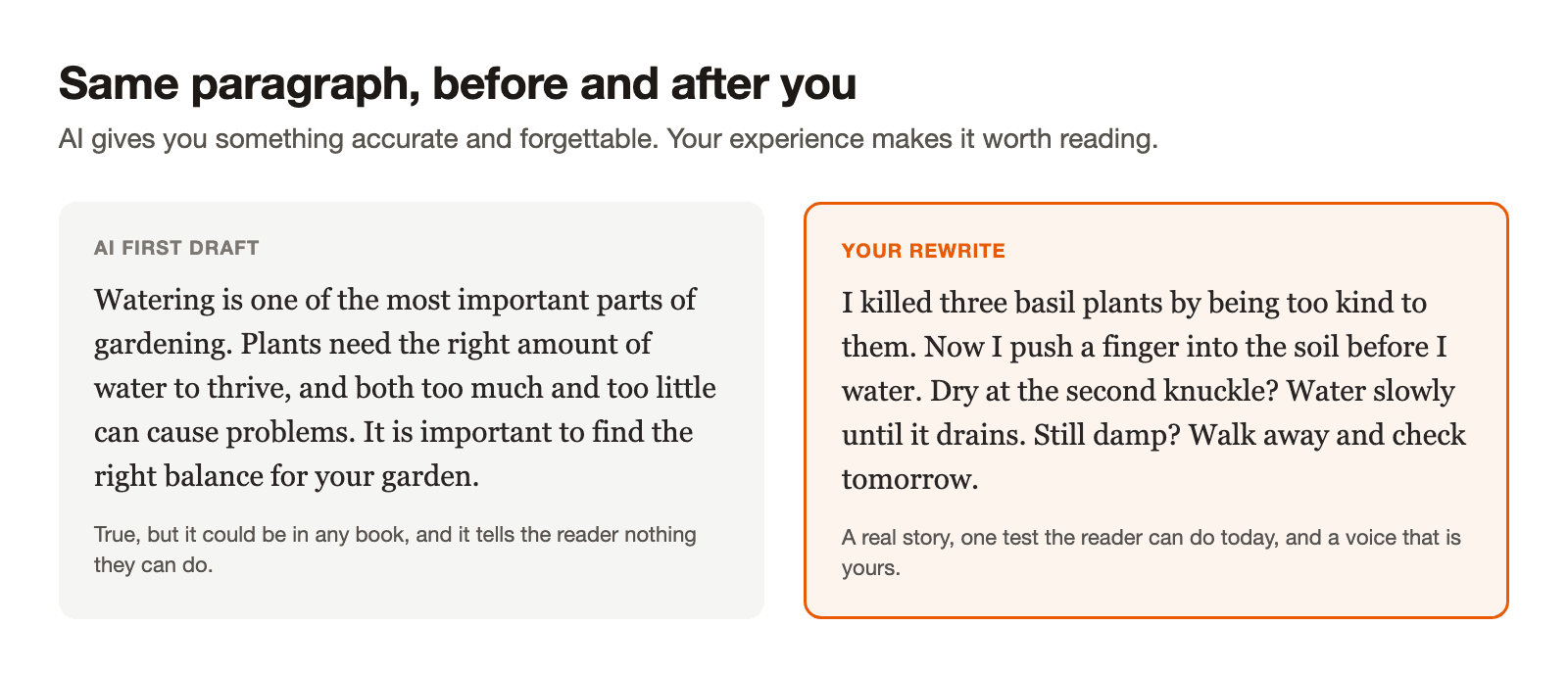
- Fill every [NEED] marker with a real story, number or example, or cut the sentence.
- Add one story per chapter from your own life, a client or someone you interviewed.
- Delete sentences that could be in any book, and replace them with what you actually do.
- Add your opinions, especially where you disagree with common advice.
Then ask the AI to read like a beginner and list problems, without rewriting anything:
Read this chapter as a first-time gardener with a small yard. List the places where you got confused, any step that is missing, any claim you would doubt, and any sentence that sounds generic. Do not rewrite anything.
Fix what it finds yourself, so the words stay yours.
Step 8: Check every fact
AI states mistakes with total confidence. Check every number, date, name and claim against an original source, such as an official site, the study itself or the manufacturer's instructions. If you cannot confirm something, soften it or cut it. Our nonfiction guide shows how to use AI to find sources without trusting it as one.
Step 9: Edit, format and make a cover
Edit in three passes: structure, then clarity, then proofreading. Then give the book to one or two people who match your reader and ask where they got bored or confused.
For the inside, you need clean headings and a layout that works on a phone, which our guide on how to format an ebook walks through. For the cover, keep the title readable at thumbnail size. Our guide on how to design an ebook cover covers sizes and what works.
Step 10: Publish, and follow the AI rules
You can publish on Amazon KDP, Apple Books, Google Play Books or your own site. Our guide to where to sell ebooks compares the options, and how to publish an ebook on Amazon KDP walks through the biggest one.
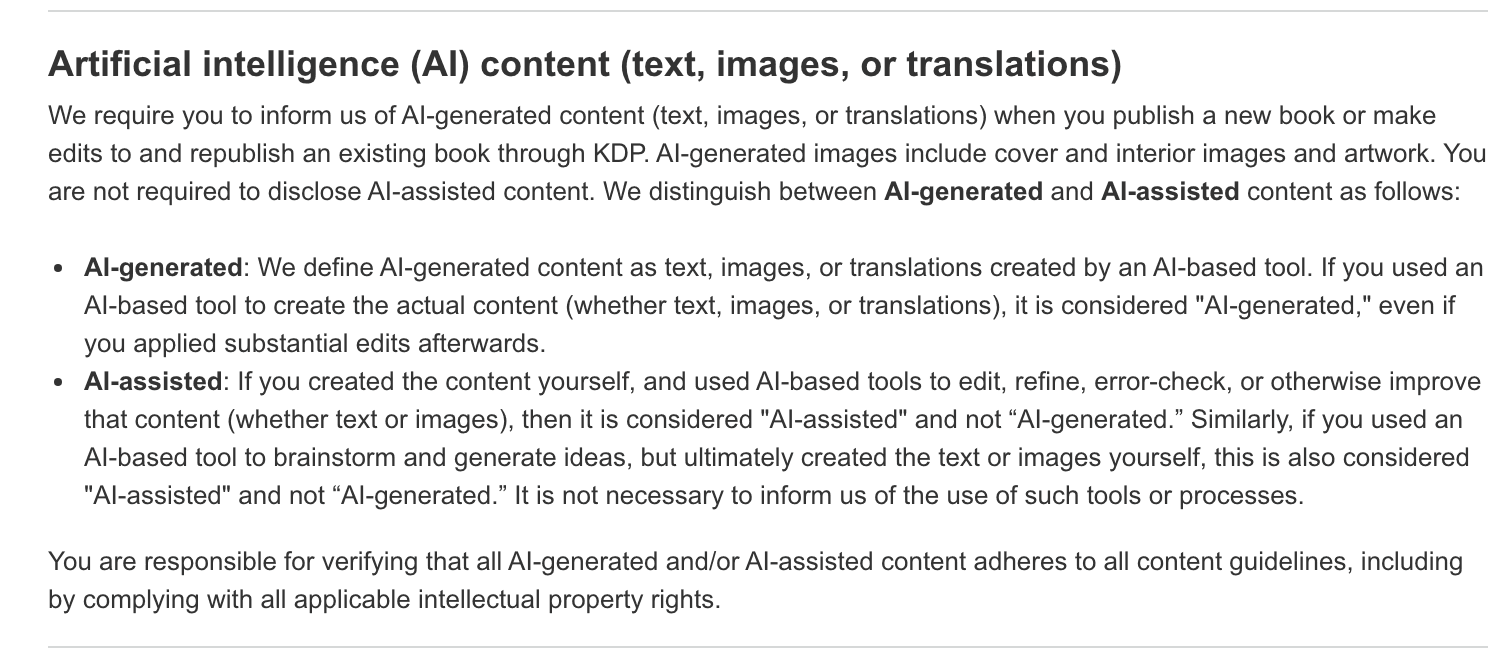
If AI drafted your text, you have to say so on Amazon, even after heavy editing. Here is the rule from KDP's content guidelines:
| Store | AI rule, as we understand it |
|---|---|
| Amazon KDP | Disclose AI-generated text, images and translations. AI-assisted needs no disclosure. |
| Apple Books | AI-generated content needs an "AI Generated by" credit and a note in the description. |
| Kobo | Declines books that are wholly or partly AI-generated. |
| Google Play Books | No rule written for AI books, but its quality rules reject low-value content. |
Rules change, so check each store before you upload. Our guide on publishing a book written by AI on Amazon has the details.
Common mistakes first-time authors make with AI
- Publishing the first draft. It reads like every other AI book, and reviews will say so.
- Asking for the whole book in one prompt. You get thin chapters that repeat each other.
- Letting AI fill gaps with made-up examples. Use [NEED] markers and fill them with real ones.
- Leaving yourself out. Your stories and opinions are the reason to buy your book instead of asking a chatbot.
- Not disclosing AI on KDP. If AI drafted the text, tick the box.
FAQ
Can AI write a whole book for me?
It can produce the words for a whole book in an hour. It cannot supply your experience, check its own facts or make the book stand out. Use it to draft, and do the deciding, rewriting and checking yourself.
How long does it take to write a book with AI?
For a first how-to book of 20,000 to 25,000 words, plan on about 25 to 50 hours, or two to four weeks of evenings. The draft takes a few hours. Rewriting and fact checking take most of the time.
Do I have to tell Amazon I used AI?
If an AI tool created the text, images or translation, yes, even if you edited it heavily. If you wrote it yourself and used AI only to edit or brainstorm, that is AI-assisted, and you do not have to disclose it.
Will readers know it was written with AI?
They will if it reads like AI: generic advice, no stories, the same rhythm in every paragraph. A draft you have rewritten with your own examples, opinions and voice reads like you, because by then it mostly is.
How many words should my first book be?
For a first how-to ebook, 20,000 to 30,000 words works well, and a short guide can be 7,500 to 20,000. Longer is not better. Readers care about whether the book solves their problem, not its page count.
How much does it cost to publish a first book?
Very little if you do the editing, formatting and cover yourself. Our self-publishing cost guide breaks down each line if you pay for help.
Your next step
Today, write the one sentence that says who your book is for and what it will help them do. Tomorrow, paste it into an AI chat with the interview prompt above and spend 30 minutes answering questions. By the end of the week you can have an outline and a first chapter to rewrite.
Describe your book in a sentence. Koobe plans the chapters, writes them, designs the cover and exports a PDF and EPUB. Your first book is free to create and preview.

“Files were ready for KDP, which is what I actually needed. First book I’ve finished.”